When electricity returns after a power cut, a smart plug may restore power differently from what you expect. Check the exact model’s default-state setting instead of assuming that “off before the outage” means “off afterward.” Also separate the plug’s output from the appliance’s own behavior.
Find the model-specific setting
TP-Link’s Tapo Smart Plugs app guide describes a Default State setting with last-state and explicit on/off choices. It warns that features vary by model and software version. Those options are an example to check, not a claim about every Tapo, Kasa or other smart plug.
Record the exact plug model, hardware revision if shown, app version and current firmware. Open the manufacturer’s current instructions and locate the relevant setting. If it is absent, ask support whether the model offers it; do not infer an undocumented default.
Separate three different questions
First, what output state does the plug select when power returns? Second, is it back online and reachable in the app? Third, what does the connected appliance do when power reaches it? These can have different answers.
A plug can have output power while still reconnecting to Wi-Fi. Conversely, a plug being online does not establish that an appliance with electronic controls will resume its prior activity. The appliance’s own instructions matter.
Review schedules and other controls
Record active schedules, timers and household automations alongside the default-state selection. If a lamp turns on later, the cause may be a scheduled action rather than the initial restoration setting. Do not change all controls simultaneously and then guess which one mattered.
Make a short sequence record: power returned; first observed plug state; app became reachable; next scheduled action; appliance response. Write unknown where the exact timing was not observed.
A practical lamp example
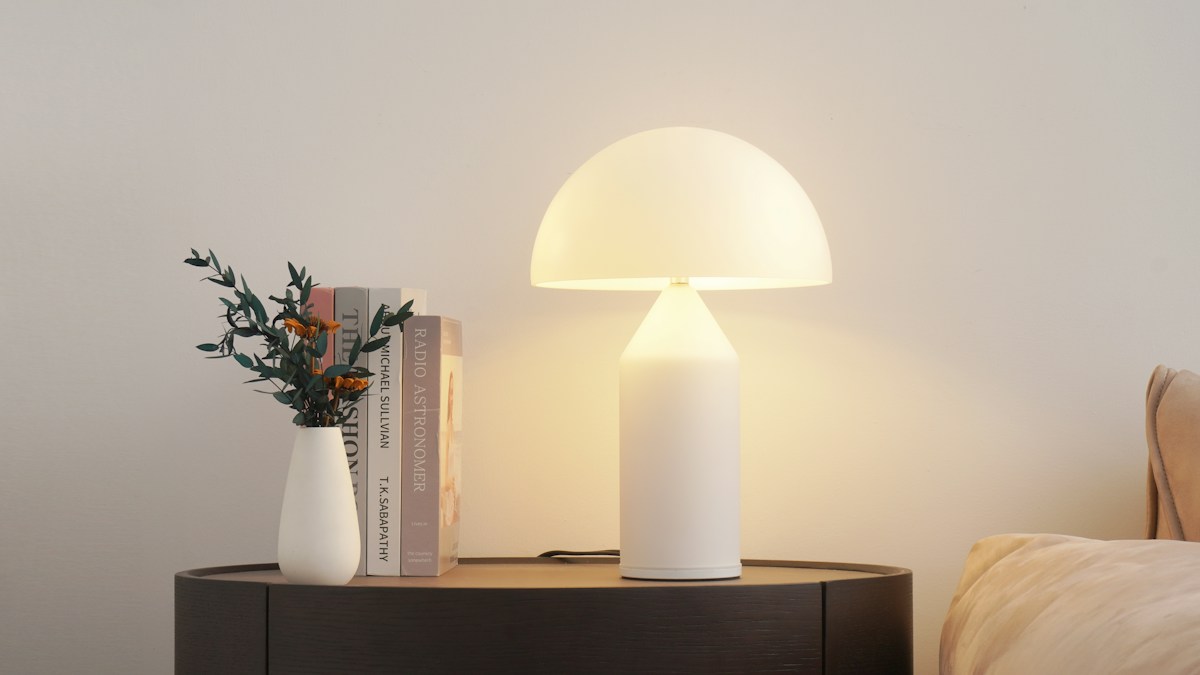
Consider an illustrative compatible lamp with a physical switch. Your goal is for the plug to remain off after power returns, then follow an evening schedule. First confirm the model’s documented off-at-restoration option and separately review the schedule.
If the lamp later illuminates at its scheduled time, that does not contradict the initial off selection. If the plug shows on but the lamp stays dark, inspect the lamp’s own switch and instructions rather than assuming the plug has no output. This example explains the questions; it is not an observed product test.
Choose an appropriate use
Follow both products’ electrical ratings and operating instructions. Do not use a convenience plug to automate equipment that must not restart unattended or equipment requiring dependable continuous power. A default-state option is not a safety certification, surge-protection guarantee or substitute for an appropriate backup-power plan.
Any optional check should follow the manual using a suitable noncritical load. Do not deliberately interrupt essential devices, open electrical equipment or simulate outages at the household breaker to test a plug.
Keep a settings note
Record intended behavior, available default-state choice, actual selection, active schedules and the manufacturer’s instruction link. Recheck after replacing the plug or changing its role. If observations differ from documented behavior, retain the exact model and sequence for support.
For connectivity problems, read our Wi-Fi setup guide. For purchase context, see the budget smart-home comparison.
Primary documentation checked November 5, 2026. No guaranteed restart behavior, energy saving or hands-on electrical test is claimed.
Photo: Andy Bob on Unsplash. Illustrative photograph, not a tested installation or provider endorsement.