An agenda tells guests what will happen. A run of show tells the people delivering an event how the sequence works. For a small club meeting, workshop, or community presentation, one page can capture timings, owners, and transitions that an attendee-facing agenda leaves out.
Start with the major moments
List arrival, opening, main activities, breaks, closing, and cleanup as relevant. Include setup before guests arrive and the handoff after they leave. These periods require people and space even when they do not appear in the public program.
Give transitions a cue and an owner
“Presentation starts at 7” does not explain who introduces the speaker or how the room knows to settle. Add the cue, action, and responsible person. For example: “After the welcome, host introduces speaker; helper changes the displayed slide.” Use agreed roles rather than assigning people without checking.
Separate start time from duration
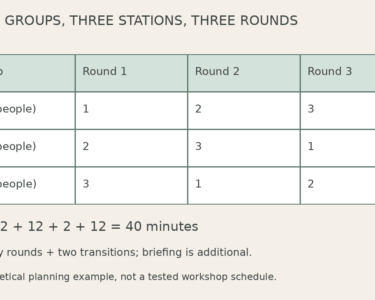
Record the planned start and approximate length where both help. If an activity begins late, duration alone does not tell you whether the rest should shift. Agree which moments are fixed and which can be shortened or moved. Allow time for ordinary transitions.
Use a compact row
Time: [Planned start]. Segment: [What happens]. Owner: [Person or role]. Cue: [What triggers it]. Needs: [Equipment or material]. Next transition: [Who takes over]. An example might read: “6:55 — welcome guests — host — doors open — attendance sheet ready — helper signals when seating is complete.”
Check that equipment and materials are available before the cue. A slide change cannot happen if the helper lacks computer access. Put detailed setup instructions on a separate preparation checklist so the run of show stays readable.
Decide how changes will be communicated
Name the person who can adjust the sequence during the event and how helpers will hear about changes. Avoid competing copies that each look current. Mark the version date and give the working copy to the people who need it.
This sheet does not replace venue requirements, emergency arrangements, or specialized event obligations. Confirm those through the responsible people and applicable instructions.
Review the transitions afterward
Note where people waited, repeated announcements, or lacked a clear cue. Update those rows before the next event rather than rebuilding the document from memory.
Use the meeting agenda guide for discussion structure. The run of show covers operational handoffs.