An outdoor smart plug must suit the actual location, connected equipment, and electrical supply. An IP rating on the plug does not make the wall outlet, extension connection, or attached appliance suitable for rain.
Read beyond the weatherproof headline
The US EP40 page is one example of an outdoor model. TP-Link says unused sockets must remain capped. Its EP40 US V1 manual provides placement and connection instructions. Use the manual matching the hardware revision; do not substitute a different model’s temperature or load rating.
Build the outdoor-system worksheet
| Part of system | Question to settle |
|---|---|
| Smart plug | Outdoor rating and exact model? |
| Supply outlet | Required protected outlet and cover? |
| Connected device | Approved for location and control method? |
| Cable route | Supported placement without strain or standing water? |
| Electrical load | Within each applicable manual limit? |
| Network | Reliable connection at intended location? |
Record each question as confirmed, unknown, or not suitable. An unknown electrical condition is not a reason to try the product outdoors and see what happens. Ask a qualified electrician about the supply or installation if needed. This article does not instruct you to add an outlet, modify wiring, or replace protective devices.
Compare complete cost, not socket count
Hypothetical: Plug A costs $25 and fits the existing compliant setup. Plug B costs $20 but would require a different supported cable arrangement and professional assessment. The $5 shelf-price advantage is not enough information to choose B. Fill in the missing costs before deciding.
Two separately controlled sockets can be useful for two compatible lighting loads, but that does not establish two independent full-load allowances. Check total and per-outlet ratings in the exact manual. Avoid appliances that must not restart unattended; a scheduled command is not supervision.
Check the location before mounting
Evaluate the intended cable route, outlet-cover clearance, access to physical controls, and the device’s orientation required by the manual. Test app connectivity at the intended location using an already safe, supported arrangement. Do not stretch cables, leave connectors exposed, immerse equipment, or treat a plastic cover as universal protection.
TP-Link’s weatherproofing explanation helps interpret product ratings, but manufacturer marketing does not override installation instructions or local requirements. Leave unsupported conditions unresolved until the appropriate professional or manufacturer answers them.
A useful first purchase
For a small lighting project, document one suitable location and one compatible load before buying a multipack. The budget smart-home guide explains the same complete-cost approach. US manufacturer information reviewed November 5, 2026; no outdoor installation or weather test is claimed.
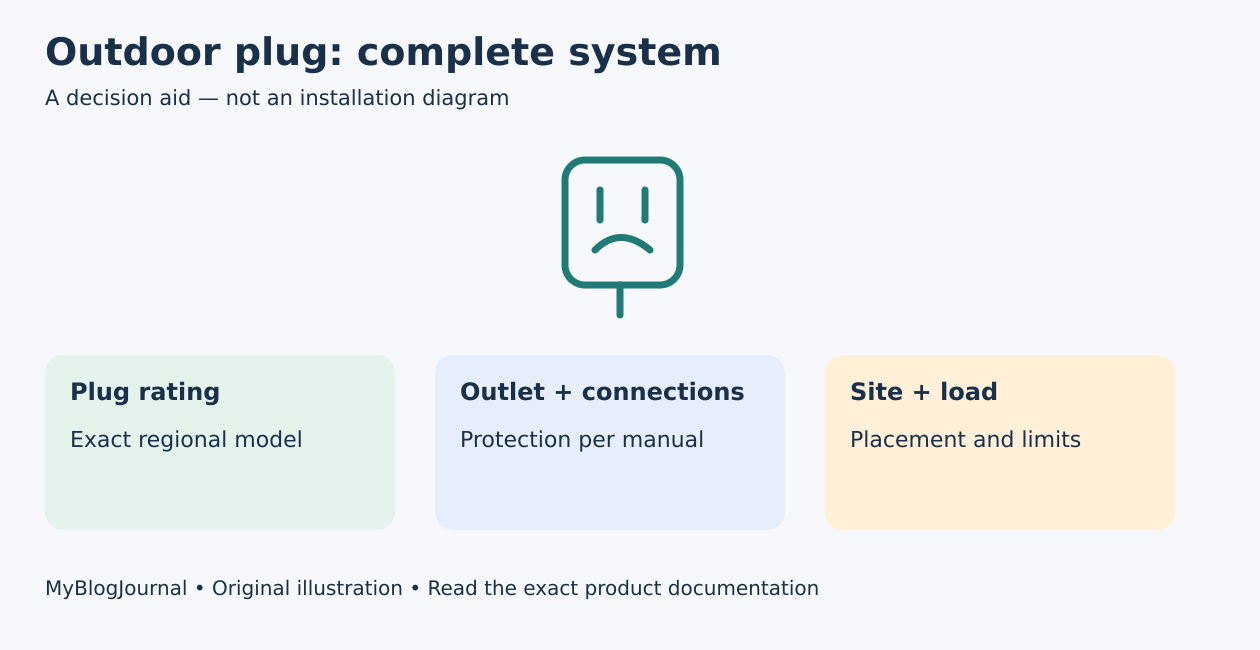
Featured diagram: original MyBlogJournal decision aid, created for this article. It is not an installation drawing or a product photograph. Links are informational; no affiliate relationship or paid placement is claimed.