A working old bell is not a compatibility test
Google lists 16–24 V AC and 10–40 VA for its wired second- and third-generation Nest Doorbells. Voltage and VA are separate checks. This is not a specification for every Nest doorbell, and a familiar-looking doorbell in a used listing is not enough to identify its generation.
Record what an installer needs
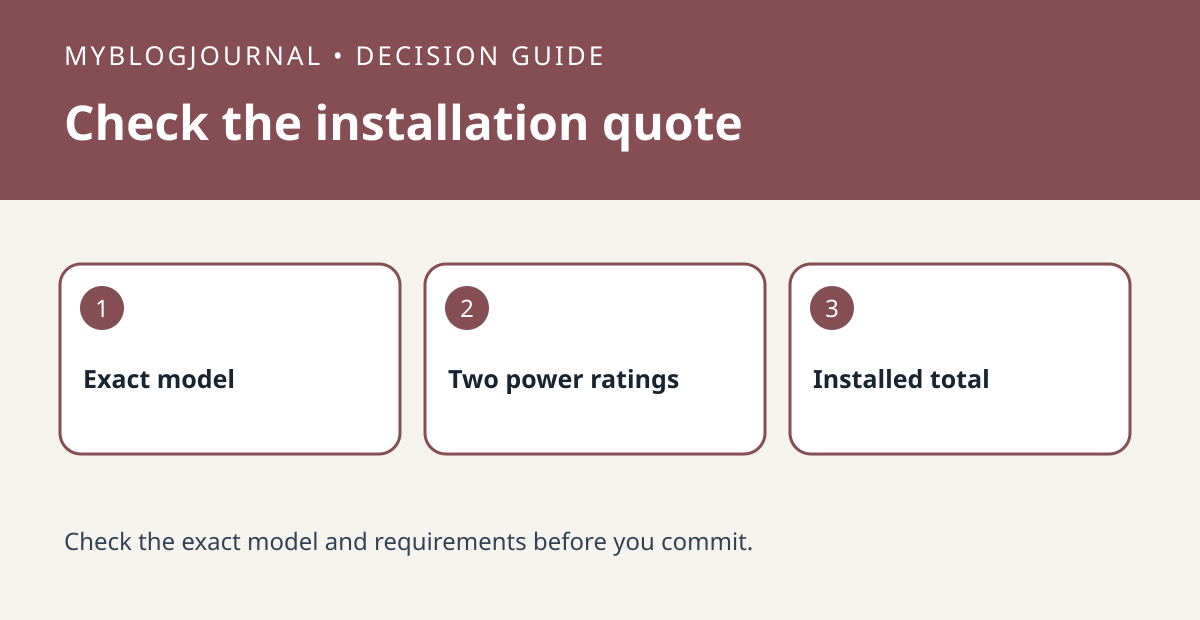
Write down the exact new doorbell model, whether there is an existing indoor chime, and any transformer rating visible without opening equipment. Ask a licensed electrician to identify unknown or inaccessible hardware, confirm the chime arrangement, and quote any necessary parts. Do not open a panel or test live wiring to fill out this worksheet.
Interpret an example without guessing at the wiring
A hypothetical label of 16 V AC and 5 VA passes the listed voltage check but not the listed VA range. A 16 V AC and 15 VA label meets both stated ranges for these models, but does not confirm that the rest of the installation or chime is suitable. An unreadable label is unknown, not a pass.
Compare complete installations
Price the device, quoted transformer or chime work, and installation separately. Compare that amount with a battery alternative that meets your alert and recording needs. The cheapest device box can lose on installed cost. If the quote says only install doorbell, ask whether transformer work is included before ordering.
Related: Video Doorbell Storage Costs: Local Card, Home Hub, or Cloud Plan?.
Primary documentation checked November 6, 2026: Google’s wired Nest transformer requirements. The examples are illustrative, not hands-on tests. Links are informational.