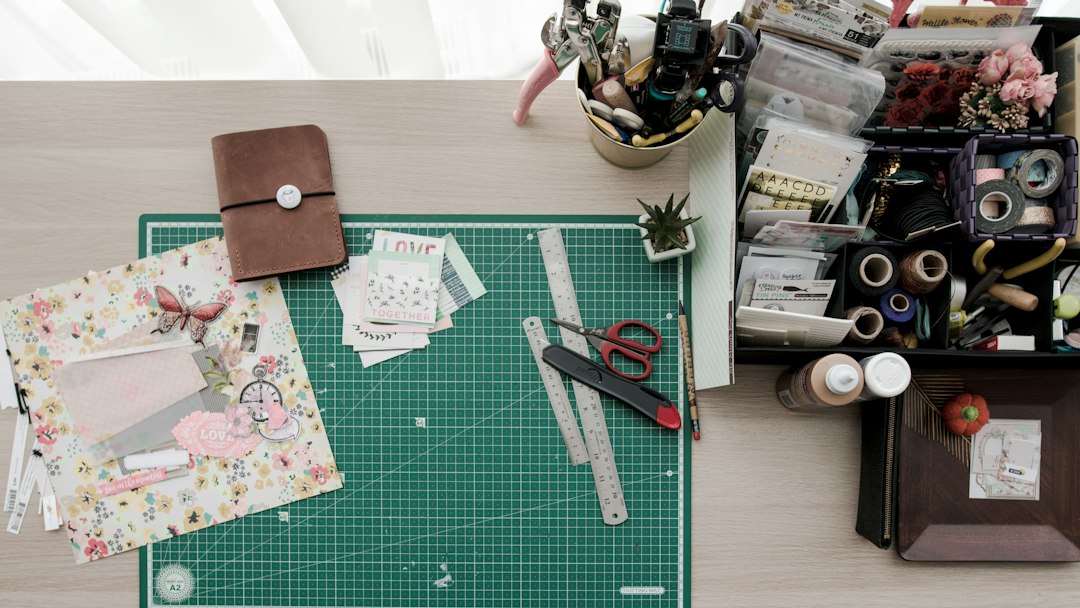
Scraps of paper, fabric, and other craft materials can be useful, but only if you can identify and retrieve them. A container filled with every offcut can hide the pieces worth keeping. Set a rule based on the projects you actually make rather than the idea that all scraps must be saved.
Define a realistic next use
Look at your usual projects. A paper-collage maker may use small pieces that would be impractical for another craft. A sewing project may require a particular size, grain direction, or material. There is no universal minimum scrap size. Keep a piece because it has a plausible use in your work.
Keep material identity when it matters
Label offcuts with information needed for later use, such as fabric type, source project, or product instructions. Similar-looking materials can behave differently. If identity is uncertain and that uncertainty matters to a technique, do not treat the piece as interchangeable with a known material.
Keep sharp, contaminated, wet, or otherwise unsuitable scraps out of a general craft bin. Follow the relevant product’s handling and disposal instructions. A scrap collection should not become an unlabeled mix of materials with conflicting storage needs.
Sort for retrieval, not for a perfect display
Broad groups such as paper, fabric, and other known materials may be enough. Within a large collection, size can be more useful than color if projects begin by searching for a piece that fits. Avoid creating tiny categories that are difficult to maintain after a normal session.
Choose a physical limit
Use a defined container or shelf area. When it fills, review the contents before expanding the storage. Keep flat pieces supported and protect delicate material from heavier items. A limit makes the tradeoff visible: keeping one more scrap means choosing whether it is more useful than something already stored.
For example, a card-making drawer might retain large sheets in one folder and small usable paper pieces in one tray. Pieces that are too small for the maker’s usual designs do not need a third overflow bag.
Review through actual projects
Check the scrap collection before cutting new material when that fits the project. Notice what never gets used and refine the rule. If suitable materials are being passed on, confirm that the recipient wants them instead of simply moving your storage problem to someone else.
Keep project-specific pieces separate using the unfinished craft-project system. General offcuts and active project components serve different purposes.