A shared shelf can become crowded even when every item has a container. The missing piece may be an agreement about whose belongings are there and what the space is for. Before buying more bins, decide how the shelf should serve the people who use it.
Name the purpose of the space
Is it for daily supplies, personal belongings, or temporary storage? Mixing those roles is possible, but the boundaries need to be visible. A shelf meant for shared tools can stop working if one person’s long-term project occupies the only accessible section.
Agree on zones together
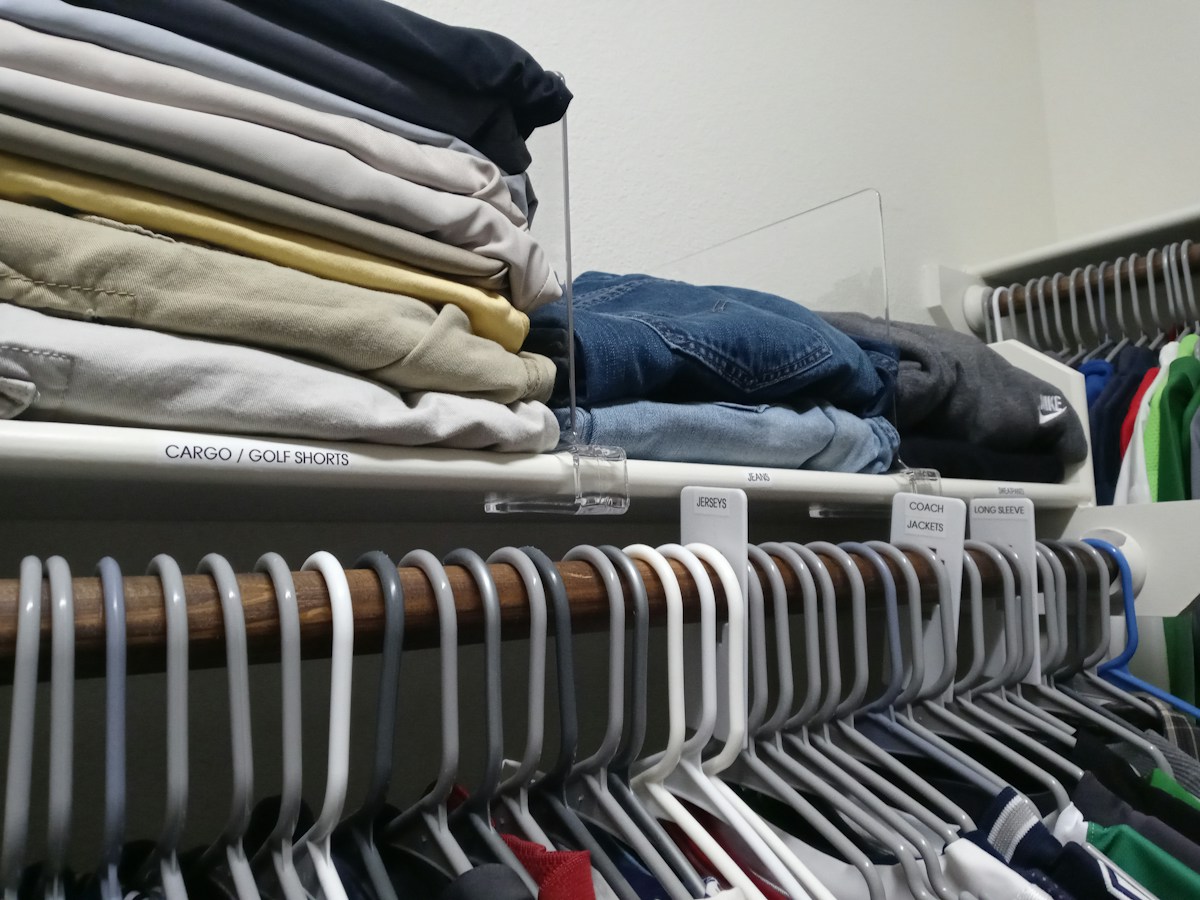
Assign space by a practical rule: one area per person, one section per activity, or a shared zone plus personal zones. Choose the arrangement with the people affected. Labels should describe an agreement, not announce a rule that one person imposed while everyone else was away.
Keep frequently used items reachable and avoid giving one person a location they cannot safely use. Check the shelf’s load and installation guidance before placing heavy objects. Storage ownership does not remove the need for suitable support and access.
Define what happens to unclaimed items
Use one clearly marked temporary area for items whose owner or destination is unknown. Add a review date and ask the household before disposing of belongings. Do not turn “unclaimed” into permission to discard another person’s property. The goal is to resolve uncertainty openly.
Set an overflow rule
An example agreement might be: “Each person has one labeled basket. When it fills, that person reviews the contents before adding items outside it.” Shared supplies can have their own limit. If the limit repeatedly fails, review whether the allocation matches actual needs instead of repeatedly moving the overflow.
Temporary exceptions should have an end point. “Keep the event materials here until Saturday’s cleanup” is clearer than “just for now.” Include who will remove them, especially when someone else needs the space afterward.
Test the arrangement in ordinary use
After a short trial, ask whether people can find and return items without moving several containers. Notice what repeatedly lands in the wrong place. That may indicate unclear ownership, an inconvenient location, or an unrealistic space limit.
Change the system when the evidence points to a practical problem. A shared shelf works when the agreement is easy to follow and easy to discuss, not when the labels are attractive.
Measure any proposed containers with the shelf fit-check guide after the space agreement is clear.