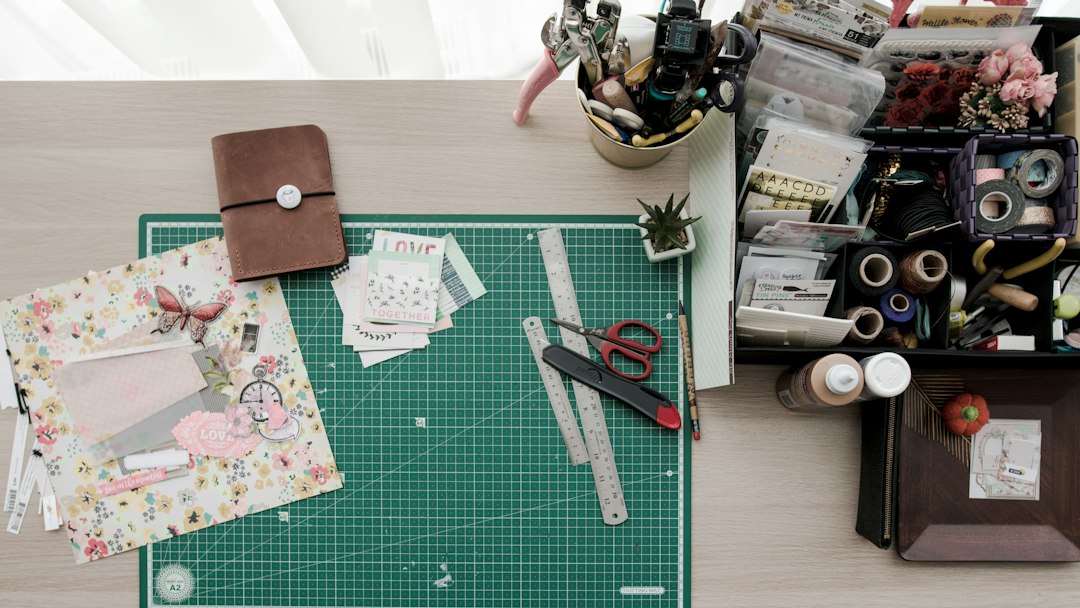
An unfinished craft project can become difficult to restart when its supplies return to a general drawer. You remember the idea but not which pieces were cut, what size you used, or where the pattern went. A project container and a short restart card preserve those details without leaving the whole work surface occupied.
Keep the project’s specific pieces, pattern reference, and labeled offcuts together. Shared scissors, rulers, and other tools can return to their normal safe storage. Put a list of those tools in the project container so you know what to collect next time. Otherwise one unfinished project can accidentally take every useful tool out of circulation.
Choose a container that supports the work without bending or crushing it. For paper work, a flat folder may be enough. For something with dimension, measure its assembled size before choosing a box. Do not stack heavy supplies over delicate pieces.
Write a restart card before packing away
Record the project name, last completed step, next step, important measurements, and missing materials. Include the source and version of any instructions. “Continue sewing” is vague; “front pocket attached; next pin the second pocket using the marked placement line” tells you where to resume.
If a test piece helped choose a color or setting, keep it with the card when practical. Label it as a test so it is not mistaken for a final component. Do not rely on a photograph to capture exact dimensions or colors under different lighting.
Respect materials that need special handling
Wet paint, uncured adhesive, blades, needles, and chemical products should not be packed casually into a closed mixed-supply box. Follow their product instructions for drying, ventilation, handling, and storage. Secure sharp items and small pieces away from children and pets. Keep original labels with products so instructions remain available.
Decide whether the project is active or simply being kept
An active project needs accessible storage and a plausible next session. A paused project can go farther back, but its restart card should explain what is needed to continue. If you no longer want to finish it, decide deliberately whether to reuse the materials, pass it on, or discard what cannot be used.
Set a limit that matches your space: for example, one accessible shelf for active projects. When that shelf fills, review it before starting another. The purpose is to protect the work you want to finish, not to create a complicated inventory of every craft supply.
Use an interruption capture note for shorter pauses during a single working session.
Photo: Volodymyr Proskurovskyi / Unsplash.