Before replacing a Nest display that looks too dim, compare its supported Ambient EQ behavior with a manual brightness setting from the same seat.
Set up the test
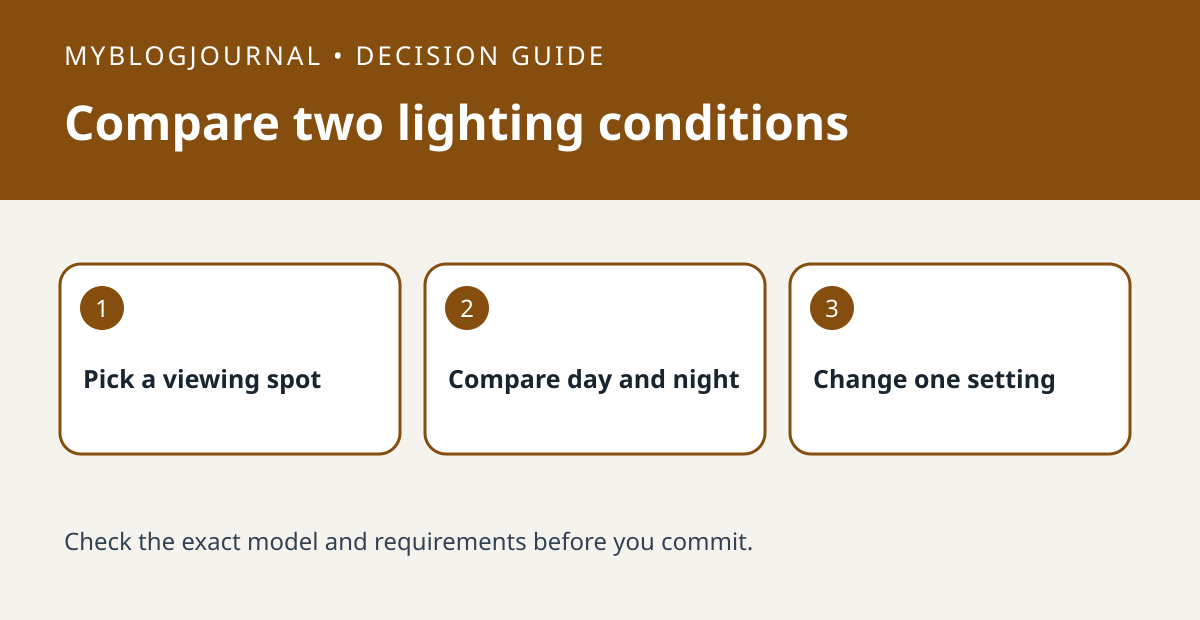
Use a familiar display screen and note the room light and viewing position. Check Google’s Ambient EQ controls for the exact model. Compare a daylight reading with a normal evening reading, keeping your viewing angle and displayed content the same.
Interpret the result
Make one supported brightness change and repeat the comparison. If the issue happens only when the room darkens, review the low-light behavior instead of assuming the panel is faulty. Restore the original setting if a brighter screen makes the room uncomfortable at night.
Worked example
A display that is readable at noon but not from the same chair after the lights go down needs a lighting comparison. That test is more informative than comparing two displays set to different brightness modes.
Documentation and next step
See the official documentation for supported settings. For a related decision, see nest display camera name vs device compatibility test.