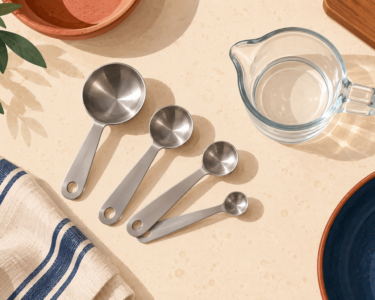
Preparing ingredients before cooking can help, but a counter covered with separate bowls is not always necessary. A useful prep-bowl plan follows the recipe’s addition order. Ingredients that enter at different times stay separate; compatible ingredients that enter together may share a container.
Read the full method before combining anything
The ingredient list does not always reveal timing. A recipe might use half an onion early and the rest as a garnish, or divide butter between two stages. Mark divided ingredients before measuring them into a single bowl. Once ingredients are mixed, separating them may be difficult or impossible.
Create a simple sequence
On paper, write the major additions in order. For an illustrative vegetable dish, the sequence could be onion first, other vegetables next, liquid later, and herbs at the end. Use your actual recipe’s instructions rather than treating this example as a cooking method. Label bowls by their stage if the contents look similar.
Keep ingredients separate when the recipe calls for different treatment, different quantities, or different times. Do not combine items simply because they are all chopped. If you are unsure, leaving them separate preserves your options.
Match the amount of preparation to the cooking pace
A method with rapid additions may benefit from having every measured ingredient ready. A slower recipe may allow some preparation during an explicitly suitable waiting stage. Read for the moments when you need your attention on the pan instead of assuming you can chop and cook at the same time.
Choose containers that fit the amount and are easy to empty. A tiny bowl filled to its rim can spill more readily than a slightly larger one. Put the containers in sequence without crowding burners, controls, or the edge of the counter.
Keep food handling separate from convenience
Do not use one container or utensil across raw animal foods and ready-to-eat ingredients without appropriate cleaning. Follow the recipe and relevant food-handling guidance for chilling and preparation. A tidy lineup does not make it appropriate to leave perishable ingredients out indefinitely.
Review what actually helped
After cooking, notice which bowls were useful and which only created washing-up. You might find that one divided ingredient needed a label, while three ingredients added together could have shared a bowl. Make a short note for the next attempt instead of making the setup more elaborate every time.
Combine the addition sequence with a recipe timing plan when several dishes need to finish together.