To find large Gmail messages that have attachments, start with has:attachment larger:10M in Gmail’s search box on a computer. This combines an attachment condition with a message-size condition. The size condition is for the email message; it is not a promise that one attached file alone is larger than the threshold.
Build the search in three stages
First search has:attachment. Then add larger:10M. If you need to include Spam and Trash, use in:anywhere has:attachment larger:10M. Google documents these operators in its Gmail search-operator reference, checked October 20, 2026. These are documented instructions; MyBlogJournal has not tested them in your account.
Use the broad first step to check that you are in the intended account and that the query behaves as expected before narrowing it. Starting with several restrictions at once makes it harder to identify which condition removed a message you expected to find.
Narrow an overloaded result with a known clue
Google also documents filename:pdf for attachment types and from: for senders. For an illustrative sender, try from:receipts@example.com has:attachment larger:10M. Substitute an address you actually recognize; example.com is a placeholder, not a sender verified by this site.
Suppose you remember a PDF invoice but not its size. Begin with the known clue, such as the sender or file type. If adding the size threshold removes the invoice, remove that condition and inspect the results again. A size screen answers a size question; it should not override your stronger evidence about which message you need.
If a message appears missing
Check the signed-in account, remove extra conditions and try the expanded scope only if appropriate. Google notes that search can return a conversation because one message in it matches, so inspect the matching message within a thread. Finding a conversation does not mean every message or attachment in that conversation satisfies every condition.
Keep a simple troubleshooting note: query entered; account checked; expected sender or filename; and which condition changed the result. Record what you observed rather than writing “search is broken” when only one combination was tried. This note is an original diagnostic aid, not a separate Gmail feature.
Find first, decide what to keep afterward
A useful next step is to open one familiar result and confirm that it is the document or conversation you meant to find. Do not treat a search result as permission to delete a whole selection. If the purpose is finding a record for reference, stop when you have verified the correct message.
If your real task is deciding where messages should remain, read our Gmail archive-versus-delete guide. That is a separate decision from constructing a size query. Work or school accounts may also have organization rules you must follow.
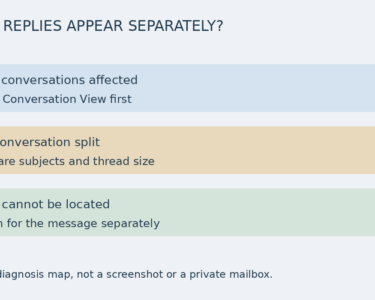
Illustration: original MyBlogJournal query diagram, not a screenshot, endorsement or evidence of a test in a private mailbox.