Fan-only control is not another cooling cycle
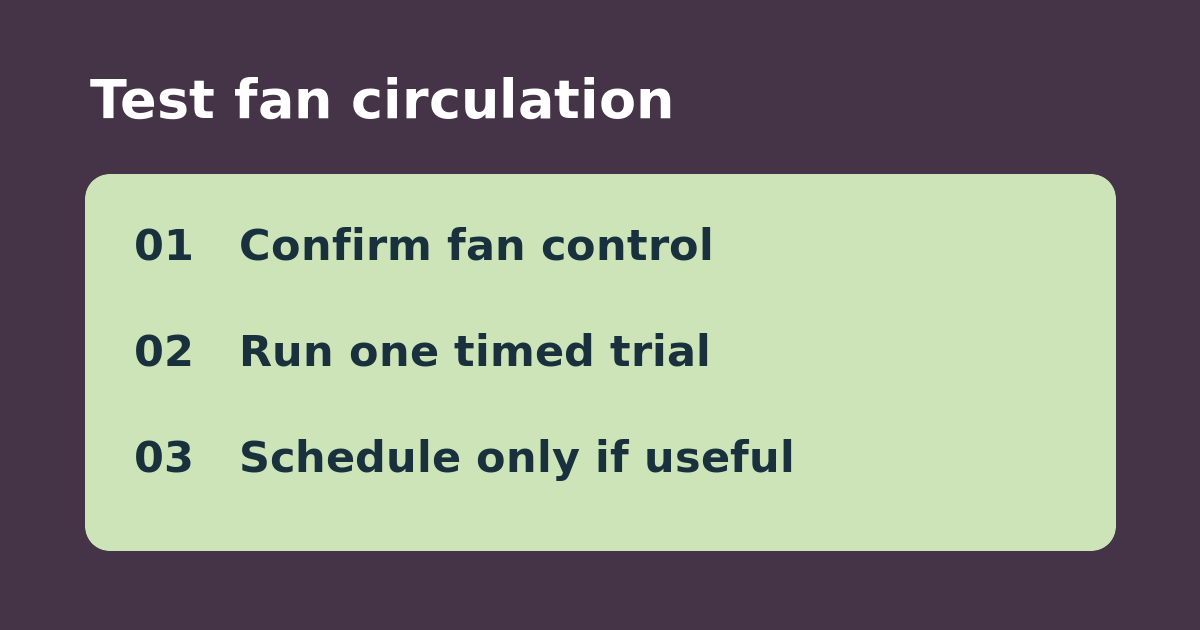
If the air feels still between heating or cooling cycles, test whether running the fan by itself helps before adding a recurring schedule. Google documents that independent fan control depends on a compatible forced-air system with a separate fan connection. Use the thermostat or app interface to check whether a fan control exists; do not open the thermostat or change wiring for this test. A fan timer runs circulation; it does not set a new temperature target.
Run one short trial under ordinary conditions
When heating and cooling are not actively running, note the mode, target, and how two occupied rooms feel. Start the shortest practical fan timer the model offers. Record when air starts moving and whether the effect reaches both rooms. Check again when the timer ends. Keep the temperature target and other settings unchanged. If a heating or cooling cycle starts during the test, record that and repeat later rather than attributing the entire result to fan-only operation.
Choose a timer, a schedule, or neither
Use a timer if you only need circulation occasionally. Consider a recurring schedule only if the same time block repeatedly benefits, and recheck noise and comfort on a normal day. If air movement is noticeable near one vent but does not help the other room, a longer schedule is not evidence you need a new thermostat; consider airflow evaluation instead. Google notes that timer and schedule behavior can differ by mode and model, so confirm the instructions for your thermostat before treating a missing schedule as a fault.
See the manufacturer’s instructions. Related: check Early-On before changing your temperature schedule.