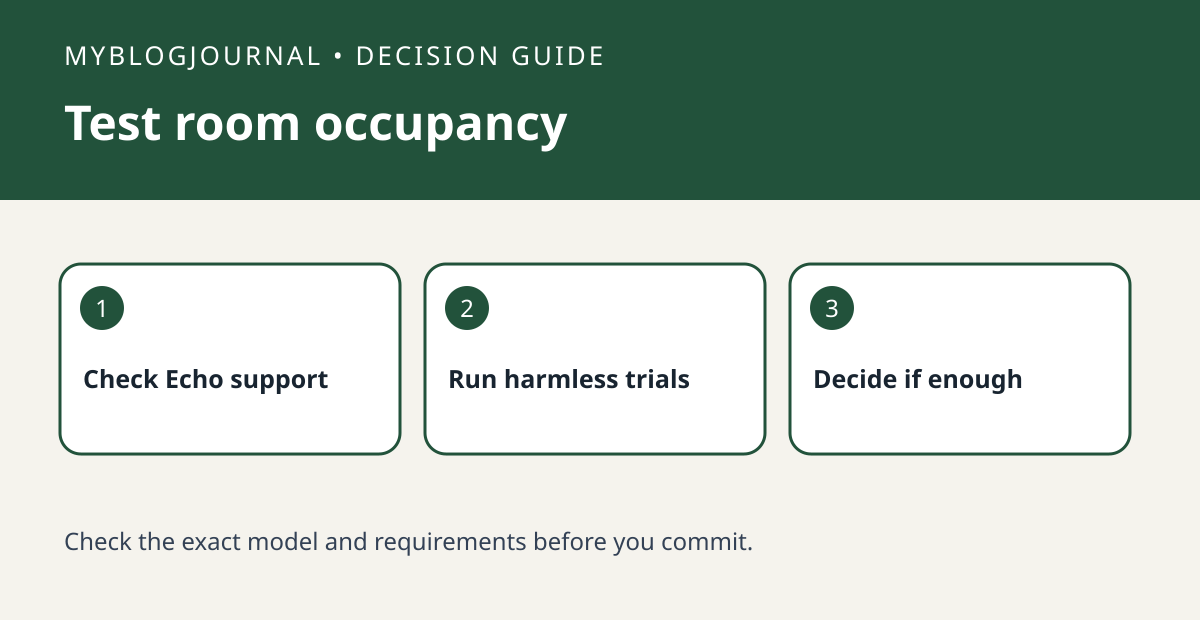
Before buying a separate motion sensor for a simple Alexa lighting routine, see whether the Echo you already own supports Occupancy Routines and whether it detects people where you need it to. Amazon describes occupancy detection on compatible devices as a way to start a routine, not a count of occupants or proof that a room is empty.
Choose a low-stakes test action
In the Alexa app, check whether your exact Echo offers the relevant occupancy starter. If so, make a temporary routine that operates one visible lamp, not a lock, alarm or heater. Run several ordinary room entries and a few trials where you pass outside the room. Record whether the lamp changes and whether it does so from a spot you did not intend to cover.
Buy only to fix an observed gap
For example, if the Echo triggers reliably near the desk but misses the doorway, try a permitted position change and repeat. If you cannot get the detection area you need without moving the Echo away from its main job, compare a dedicated sensor whose trigger is documented for Alexa. If the existing Echo covers the intended area, you may not need separate hardware. Remove the temporary routine or restore the original setup after the trial.
Source: manufacturer’s current instructions. Related: compare Google Home presence signals.