
A seat description can include several different materials or mechanisms. A useful inquiry begins with the shop’s specific diagnosis.
What to verify
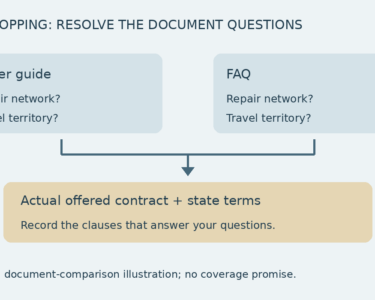
What item is diagnosed? What replacement or repair is proposed? What agreement language addresses that item and cause?
Write the answer beside its supporting document, date, and source. Separate an observed fact from a question that still needs confirmation. If two records disagree, preserve both and ask the responsible organization to identify the applicable version.
Worked example
A fictional estimate says seat repair but does not identify the component. The owner requests a more precise description before asking the administrator.
The example is fictional and illustrates recordkeeping, not a promised claim result. Substitute the facts from your own transaction; do not change a date or description merely to make it fit a preferred outcome.
A practical next step
Avoid presenting a symptom as a confirmed failed part.
Send one focused request through the verified contact route shown in your paperwork. Keep the response with the original question. Mark the item resolved only when the specific discrepancy or missing information has been addressed.
Scope and source
This checklist does not determine coverage, interpret state law, or replace the agreement applicable to your vehicle. For general background, see the FTC guide to auto warranties and service contracts. Coverage conclusions require the actual terms and relevant facts.