When a recipe supplies flour in grams, use that stated weight with a kitchen scale. If you must use cups, check the recipe developer’s method. For the spoon-and-level method described here, loosen the flour, spoon it into a dry measuring cup, and sweep the top level without pressing it down.
Why the method matters
Flour can settle or become compressed in a container. A cup filled by pushing it into a bag can contain a different amount from a cup filled lightly with a spoon. The cup’s volume may be unchanged while the amount of flour changes. That makes this a measuring-technique problem rather than a reason to change the recipe’s liquid immediately.
Use the recipe’s gram amount
Place your mixing bowl on the scale, choose grams, and tare it to zero before adding flour. Add flour gradually as you approach the stated amount. If you overshoot, remove some flour before mixing in other ingredients. Check the scale’s instructions, capacity, and measurement resolution rather than assuming every scale behaves the same.
Avoid a universal cups-to-grams conversion. Different flour types, measuring conventions, and recipe developers can use different values. A weight printed in the recipe is the most direct target for that recipe. If the recipe gives only cups, look for its measuring instructions before importing a conversion from another source.
Spoon and level when using cups
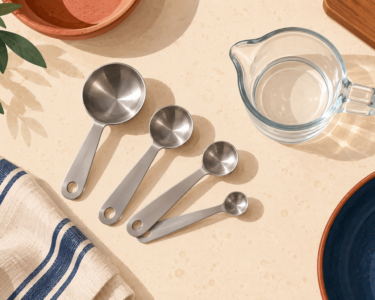
Stir or fluff the flour in its container. Gently spoon flour into a dry measuring cup until it is slightly overfull, then pass a straight edge across the rim to remove the excess. Do not tap the cup on the counter, shake it to settle the flour, or press flour into the corners. These actions undermine a light-fill method.
Use a cup designed to be leveled at the top. A spouted liquid jug is awkward for this task because its measurement line sits below the rim. Put the excess flour back only if your tools and working area are clean and dry; keep raw ingredients away from ready-to-eat food.
Make the next bake easier to compare
Record the recipe link, flour type, and whether you used grams or the developer’s cup method. If the result disappoints, change one relevant variable at a time instead of altering flour, liquid, oven settings, and baking time together. Accurate measurement helps make comparisons meaningful but cannot guarantee a recipe’s result.
Source: King Arthur Baking’s flour-measurement guide, checked October 17, 2026. This article covers filling a flour measure; our grams versus milliliters guide covers the separate difference between mass and volume.
Photo: Immo Wegmann / Unsplash. Illustrative stock photograph.
Before mixing, check whether the recipe requires softened, melted or cold butter.