Yes. USDA guidance says hot food can be placed directly in the refrigerator or rapidly chilled in an ice or cold-water bath before refrigeration. Do not leave cooked leftovers on the counter until they feel completely cool. For large quantities, divide the food into smaller, shallow containers so it can cool faster.
Set up before dinner finishes
Have clean, suitable food-storage containers and a clear refrigerator space ready. Check that your refrigerator is at 40°F or below with an appliance thermometer. Choose containers that can safely handle the food temperature, following their manufacturer’s instructions; a familiar container is not automatically suitable for every hot-food use.
If a deep pot contains much more food than you will eat, plan its storage before serving. Several shallow portions are easier to cool and later use than one large, dense mass. Avoid crowding the refrigerator so tightly that cold air cannot circulate.
Watch the clock rather than waiting for a feeling
USDA recommends refrigerating perishable leftovers within two hours, or within one hour when the surrounding temperature exceeds 90°F. These are maximum room-temperature limits, not instructions to wait that long. Put leftovers away promptly. If food has been out beyond the applicable limit, discard it rather than assuming refrigeration will make it safe again.
Write down when cooking or safe hot holding ended if a gathering makes the timeline easy to lose. Include time spent on the table during serving. Do not use smell, appearance, or a tiny taste as a substitute for known handling history.
Choose portions you can use
Label the container with the food name and storage date. Decide which portions you expect to use soon and which you will freeze, using the storage guidance appropriate to the food. Keep the label readable after the container moves to another shelf or freezer compartment.
For a small household, separate tomorrow’s portion before packing the rest. This makes the next meal easier to identify without repeatedly opening every container. The goal is prompt cooling and clear storage history; a neat stack alone does not establish that food was handled safely.
Source checked October 17, 2026: USDA leftovers and food safety. Continue with our fridge and freezer labeling system. This guide covers cooling newly cooked food; it is separate from our thawing instructions.
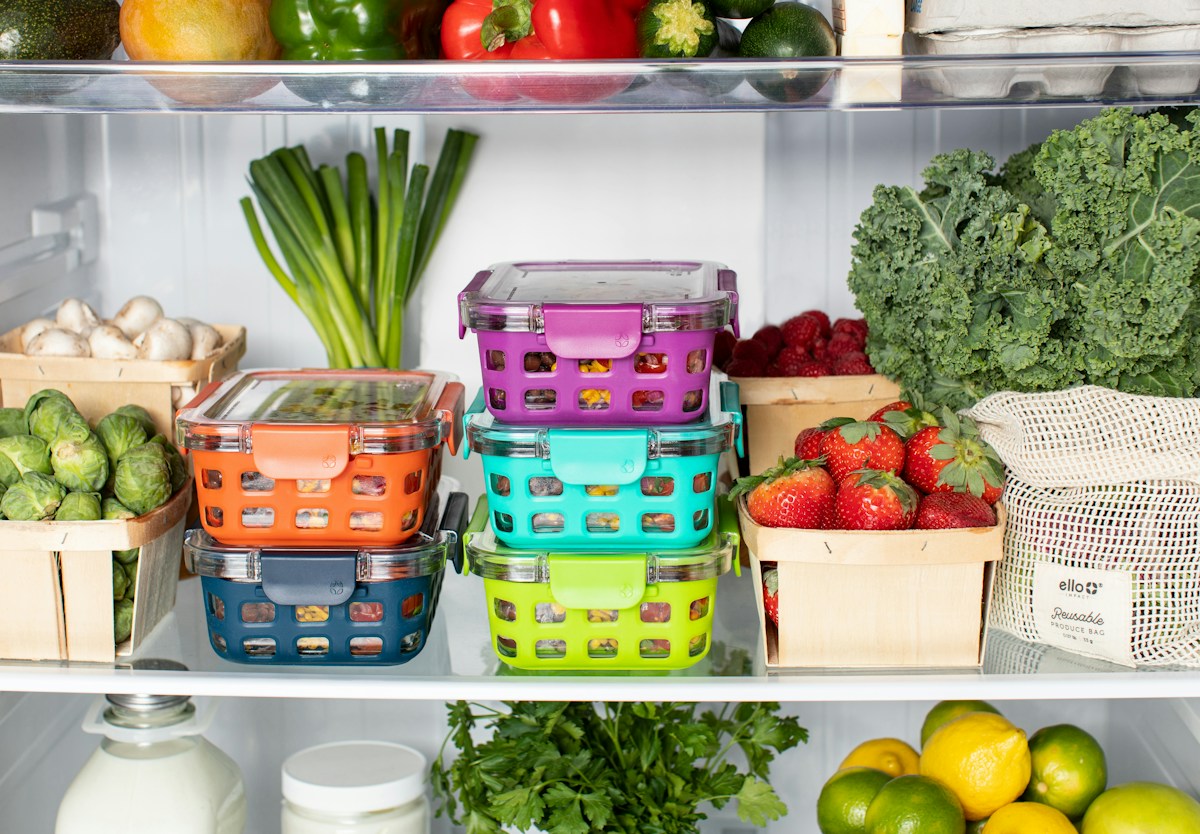
Photo: Ello / Unsplash. Illustrative stock photograph.