Estimate a task by separating preparation, active work, waiting, and cleanup. Then compare your estimate with a few real examples from your own day. This is a practical planning method, not a promise that every interruption can be predicted or that you can fit more work into the same hours.
Define a finish line before choosing a duration
Clean the kitchen is too vague to estimate consistently. Load the dishwasher, wipe the counter, and put away the food describes an observable finish. Similarly, renew the document may include finding identification, completing a form, traveling, and waiting. Write the actual deliverable in a sentence. If several people would interpret it differently, the estimate is not ready.
Make a four-part estimate
Record preparation, active effort, unavoidable waiting, and closing steps separately. A hypothetical laundry task might require ten minutes of sorting and loading, a machine cycle you do not actively supervise, and another block for hanging or folding. The clock time until completion differs from the amount of attention you must supply. Do not book the final step before the waiting period can realistically end.
Use a range when the task is uncertain
For a familiar job, a single working estimate may be enough. For an unfamiliar one, write a range and name the uncertainty: 30–60 minutes depending on whether the account documents are ready. These numbers are examples, not recommended universal durations. If the upper end will not fit today, schedule only the first meaningful step and leave the rest as unscheduled work.
Calibrate with a small record
For the next few comparable tasks, note the estimate, actual start and end, interruptions, and what counted as finished. You do not need to track your whole life. Compare like with like: a quick tidy is not a deep clean, and an uninterrupted form is not one requiring a support call. Update your next estimate using your own observations instead of a generic productivity multiplier.
Leave transition space on the calendar
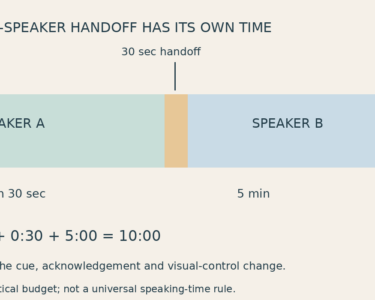
A task finishing at 2:00 does not guarantee you can begin a different appointment at 2:00. Account for travel, packing away materials, bathroom breaks, or switching equipment. Choose buffers based on the situation rather than adding the same percentage to everything. Keep fixed appointments distinct from flexible tasks so an overrun does not silently move a real deadline.
Use a recovery rule when the estimate fails
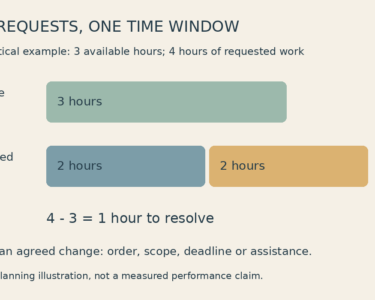
When you reach the planned stop, choose deliberately: finish a small final step, reschedule the remainder, ask for help, or reduce scope. Write what remains so restarting is easier. A missed estimate is information, not proof of personal failure. If work is regularly assigned beyond available hours, clearer estimates may expose a capacity problem, but a notebook alone cannot resolve that mismatch.
Related guide
Continue with a weekly planning routine. For two practical planning exercises, see how to measure shelves before buying storage bins and track household supplies without overbuying.
Featured photo: Kelly Sikkema on Unsplash, used under the Unsplash License. Illustrative stock photograph, not a product test or a screenshot of the steps.