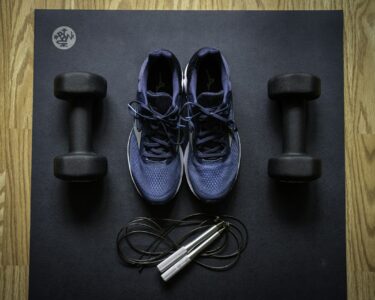
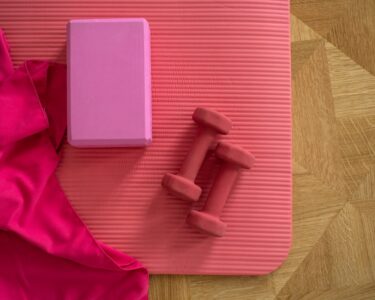
Choose an exercise mat for the movements you intend to do, the floor you use, and the space available. More thickness is not automatically better for every task. Start by checking whether an existing suitable mat works before buying another product; this is a feature checklist, not a hands-on product ranking.
List the actual uses
Write down whether your routine involves floor exercises, seated mobility, standing movement, yoga, or equipment. A mat intended for stretching may not be rated for heavy equipment or dropped weights. Follow the mat and equipment manufacturers’ instructions rather than treating every padded rectangle as interchangeable.
Compare cushioning with stability
A softer mat can feel comfortable for some floor positions, while standing work requires a dependable surface. Do not assume that a thicker mat prevents injury or suits every joint condition. Try ordinary position changes cautiously if a store permits it, and stop if the surface feels unstable. For pain or a medical limitation, seek suitable professional advice instead of expecting a mat to solve the problem.
Check size against your body and room
Compare the published length and width with the space required by your routine. Measure the usable floor area after moving obstacles, not just the gap between furniture. You may need room beyond the mat for arms or legs. A mat that fits the cupboard but forces movements toward a table corner is not a useful fit.
Check both contact surfaces
Grip against your hands or feet and grip against the floor are different considerations. Check the intended flooring and whether the mat moves, bunches, or curls. Do not stack loose mats or rugs to create an improvised thicker surface. Keep the setup dry and follow footwear guidance for the specific routine and product.
Read care and storage instructions
Check how the material should be cleaned, dried, rolled, or folded. A mat that is difficult to dry or too bulky to store may be inconvenient in a shared room. Keep it away from conditions the manufacturer warns against. Examine it for tears, loose material, and curled edges before use, and replace or stop using damaged equipment when appropriate.
Use a short comparison note
Record intended activity, dimensions, surface compatibility, cushioning feel, care method, and storage location. Compare these needs rather than unsupported claims such as professional-grade or injury-proof. Begin with a manageable routine on a safe surface; a mat is a tool for the activity, not a reason to increase difficulty or continue through pain.
Related guide
Continue with which beginner home-workout equipment is actually useful.
Source and further reading
REI Expert Advice: mat materials, thickness, and size considerations. Guidance checked October 16, 2026; interfaces and product instructions may change.
Featured photograph: Elena Kloppenburg on Unsplash, used under the Unsplash License. Illustrative stock photo, not a screenshot, product test, or demonstration of every instruction.